Find out how a piece of plastic discarded in a Mauritanian town nearly had devastating consequences for a horse and her owner.
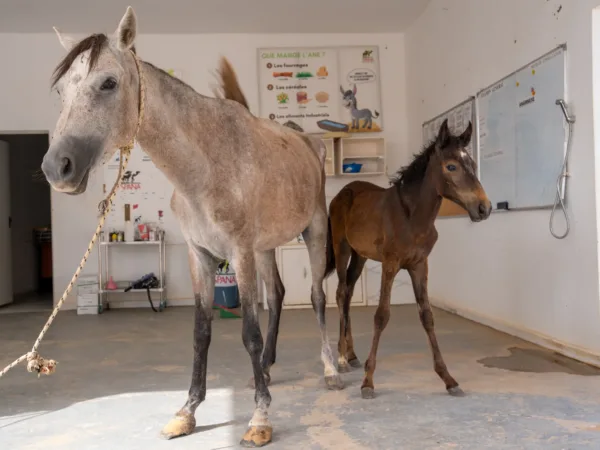
This World Animal Day (4 October 2025), we’re highlighting the crucial link between the health of people, the planet and working animals like Alruba, a seven-year-old horse from the border town of Boghé, in southern Mauritania.
Alruba would usually be seen around Boghé transporting construction equipment for her owner, Beyay, accompanied by her young foal, Tifl. Alruba is not only a long-time companion for Beyay – she’s vital to his family’s livelihood. However, when Alruba became sick recently, Beyay had to stop working, which affected his family’s income severely.
A very worried Beyay took Alruba to SPANA’s centre in Boghé, with little Tifl in tow. The vet team examined Alruba carefully. She had a dull and weak appearance, was severely dehydrated and was refusing to eat. Further examination revealed she had accidentally eaten some plastic waste that was now blocked in her system.
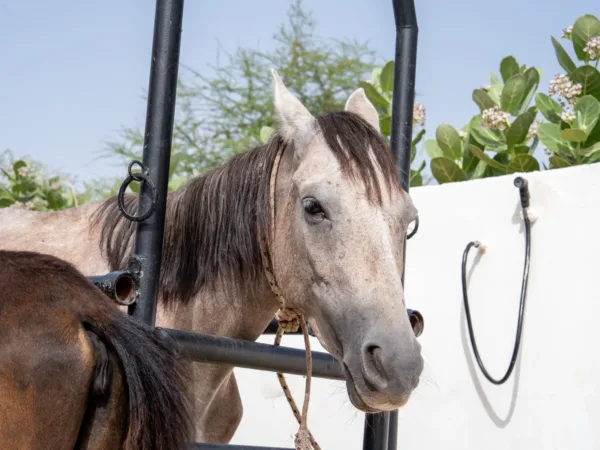
The team worked fast to prevent a potentially fatal outcome. They carried out a procedure to carefully remove the plastic. Oral fluids were administered by tube to rehydrate her and help lubricate the passage of any further small pieces of plastic through her gastrointestinal system. Alruba was given pain relief and admitted to SPANA’s stables with Tifl for further observation and treatment. During Alruba’s stay, she was fed small, frequent meals of wet food until she recovered fully.
When Alruba was ready to return home, the team advised Beyay to ensure his horse always has access to clean water and to keep her away from areas with lots of rubbish. He was also encouraged to return to the centre if he noticed anything abnormal.
Beyay was delighted that Alruba would be OK. He said: ‘I trust SPANA because they never refuse to help and they always explain the treatment to me. Alruba has been with me for five years and she’s part of my life. Without SPANA, I wouldn’t know how to care for her in such a situation.’
Dr Rebekah Sullivan, who treated Alruba, added: ‘Alruba came to the clinic in a very poor state. We knew we had to act quickly to remove the plastic blockage to save her life and ensure Tifl kept her mum. Unfortunately, such cases of ‘plastic colic’ are all too common where underfed animals are forced to scavenge for food in litter strewn areas. By treating Alruba in the clinic, we not only saved her life, but used the opportunity to talk to all the owners visiting the clinic about the dangers of plastic pollution and how to keep their working animals safe.’
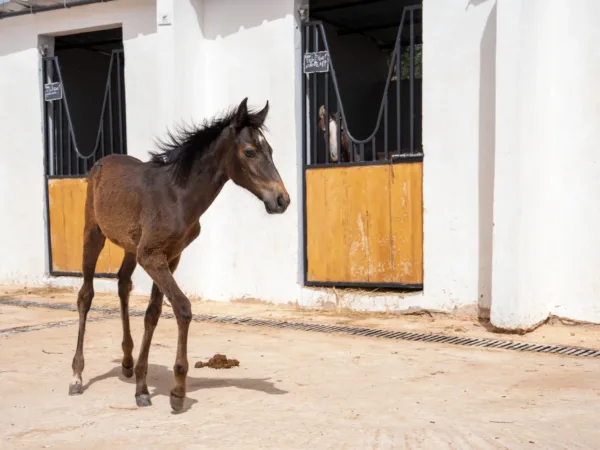
Alruba’s life-threatening brush with plastic highlights how animal, human and environmental health are interdependent. This is the core principle of the global concept known as One Health, which recognises that if the health of one of these areas suffers, the other two will also likely be impacted. Plastic pollution made Alruba extremely ill and unable to work, leaving Beyay unable to provide for his family.
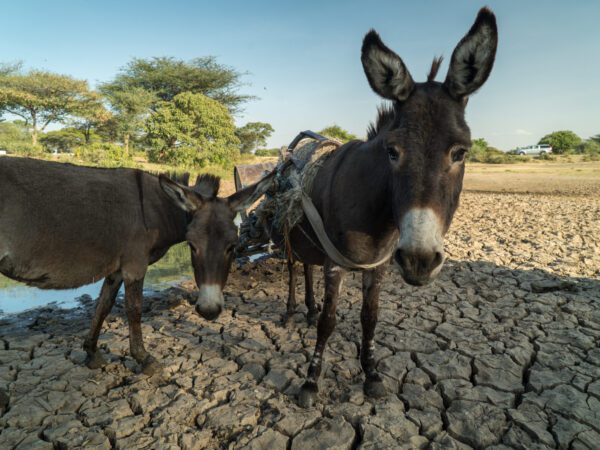
In countries where SPANA and our local partners work, plastic pollution can be a major problem for working animals. In areas where waste collection services are limited, discarded plastic can litter communities. As a result, grazing working animals can accidentally consume this plastic waste – resulting in life-threatening illnesses.
We recognise that the welfare of working animals directly impacts and is impacted by the health of the environment and people. That’s why we’re pioneering new approaches across SPANA’s work that recognise and respect the interdependency between animals, people and the environment, with the ultimate aim of improving working animal welfare. Find out more about One Health and World Animal Day here. Thank you so much for your support.