
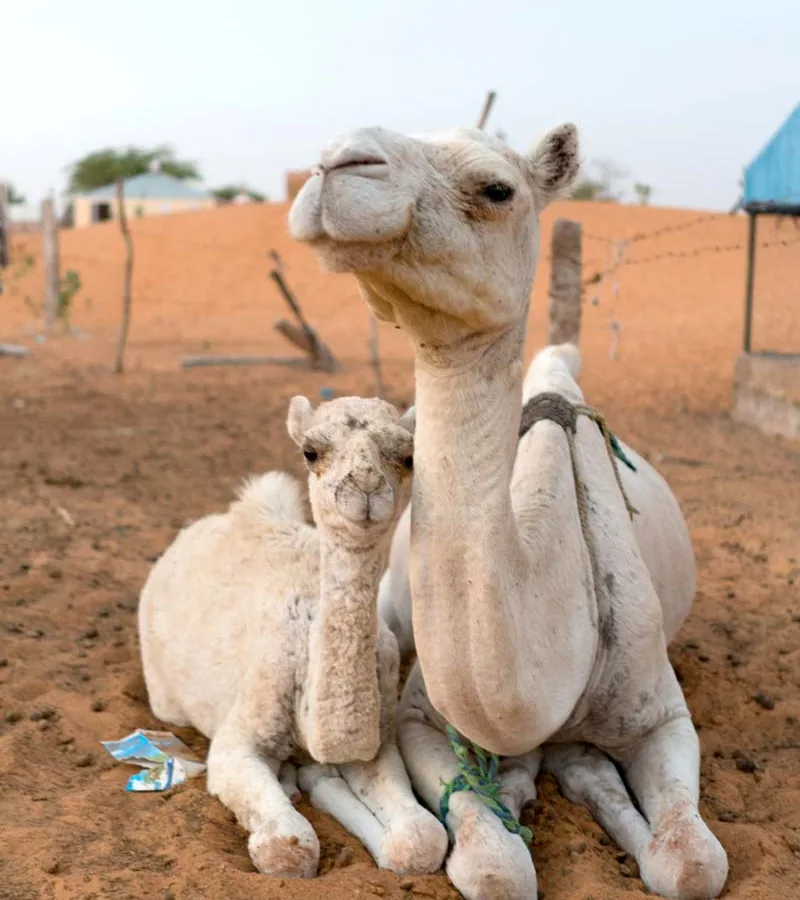
What Are The Different Types of Camels?
There are currently three defined genera of camel. These include the one-humped Dromedary, also known as the Arabian Camel and the two-humped Bactrian Camels, which include both a domestic variety and the Tartarian, previously regarded as a wild Bactrian camel
How Big Are Camels?
An adult dromedary camel stands at around 6.5ft tall from hoof to shoulder and weighs between 300kg to 600kg (660lb-1,320lb).
The domestic bactrian camel grows to 6ft from hoof to shoulder and weighs 600kg to 1,000kg (1,300lb-2,200lb). Wild Bactrian Camels are slightly smaller and slenderer.
Where do Camels Live?
Dromedary Camels are typically found in North Africa and the Middle East, with the largest population being in Somalia. There is a small wild population in Australia, which was established in the early 1840s from camels imported from India. In fact, Australia now has the largest population of feral camels in the world. Dromedary Camels are well-adapted to the desert, with features like their long legs that help them stay cool and navigate sandy terrain. They have specialised nostrils that can close to keep out sand and a unique ability to drink large amounts of water in one go, which is essential for survival in arid environments.
Bactrian Camels are native to the Gobi Desert in China and Southwest Mongolia. They can adapt to extreme temperature fluctuations, with summer highs around 45°C and winter lows plummeting to -30°C. Their thick fur provides insulation against the cold, while their two humps store fat that can be converted into water and energy when food and water are scarce.
What do Camels Eat?
Camels are herbivores, mostly living on grass, leaves, shrubs and anything else they can find in the desert. They spend most of their days grazing and searching for food. Camels have tough mouths, allowing them to eat and swallow spiky and thorny plants often found in the desert.
What Can Camels See?
Camels have a good sense of vision and can see well during the day and night. They have a wide-angled vision, allowing them to see upcoming predators more easily. Camels have three sets of eyelids and two rows of long, thick eyelashes to protect their eyes from harsh desert conditions. The third eyelid, known as the nictitating membrane, acts like a natural windshield wiper, moving sideways across the eye to clear away sand and debris while still allowing camels to see. This adaptation, along with their bushy eyelashes, helps them survive in sandstorms and prevents irritation or damage to their eyes in the dry, dusty environments they inhabit.
Do Camels Spit?
Yes, camels do spit, but it’s not actually saliva. When a camel spits, it’s more of a defensive behaviour where they expel a mixture of stomach contents (regurgitated food) and saliva. This is often used to express discomfort or aggression, especially when they feel threatened or irritated. It’s their way of saying ‘back off’.
How Long Can a Camel Go Without Water?
Typically, camels can go without water for about one to two weeks, but have been known to go even longer. Their ability to survive without water depends on factors like the climate, their level of exertion, and the availability of food, as they can also get some moisture from the vegetation they eat.
Why do Camels Have Thick Fur?
Camels have thick fur to survive the daily struggles of the desert. The dense fur acts as insulation, protecting them from the intense heat during the day by limiting the amount of heat absorbed. At night, when desert temperatures drop, the fur helps retain body heat, allowing camels to maintain a stable temperature. Additionally, the fur shields them from UV radiation and prevents sand from irritating their skin during sandstorms.
Can Camels Swim?
Camels can swim; but because they live in the desert, they rarely encounter large bodies of water; so it isn’t common to see them swimming.
A rare breed of dromedary camels, the Kharai camel has been seen swimming up to 3km in India to reach grazing areas.
Why Do Camels Have Long Legs?
Camels have long legs to help them navigate and survive in the desert. These long legs aid in heat regulation by increasing the distance between their bodies and the hot ground, reducing excessive heat absorption. They also help the camel cover long distances efficiently, as their stride helps them move through sand without sinking too deeply. Additionally, their legs help distribute their weight more evenly across the soft sand, preventing them from getting stuck and allowing them to reach vegetation and water sources that might be inaccessible to animals with shorter legs.
Five Interesting Camel Facts
- Camel humps store fat, not water which people usually assume.
- Camels communicate with moans and loud bellows. Mothers will grunt to their newborns to communicate with them.
- They have a split upper lip with each half moving separately to allow them to get closer to the ground and eat shorter grass. With food being scarce in the desert this makes it easier for them to eat what is there.
- They only sleep, on average, 1.7 hours a night. The rest of the time they are dozing or awake.
- Their milk has lots of nutritious benefits. It is rich in protein, vitamins and minerals and contains more iron and vitamin C than cow’s milk. Camel milk is also lower in lactose, so is often better for people who are lactose intolerant.
Interested in learning more about camels? Read our article for more fun facts about camels.
SPANA helps working camels all over the world. You can read some incredible success stories on how we have helped care for camels including Deepak who survived a terrible virus in his herd. If you want to help SPANA continue our incredible work why not consider donating to help provide care and treatment for working animals?