A hundred years ago World Animal Day was created to shine a light on the welfare of animals everywhere. For just over a century, SPANA has been doing the same – championing the wellbeing of working animals around the world. Today, that shared mission feels more urgent than ever. The ever-worsening climate crisis is bringing more extreme weather, such as droughts and floods, making life increasingly perilous for working animals.
This year’s World Animal Day theme, Save Animals, Save the Planet, couldn’t be more relevant. It reminds us that animals, people and the environment are all connected through the concept of One Health. When animals suffer, people suffer. When the environment is damaged, both animals and people pay the price.
For example, the climate crisis is more than an environmental emergency. It is a health crisis that endangers animals and people alike. Climate change causes more severe weather which can destroy shelters, disrupt food supplies, spread disease and threaten working animals’ lives.
I see this firsthand in Ethiopia, where drought turns survival into a daily struggle for working animals. The climate crisis hits horses, donkeys, mules, camels and oxen particularly hard, as they are often overlooked and the last to receive help during crises.
Pollution is another way in which human activity harms both animals and the environment. We see the impact of plastic pollution in our clinics and centres. Horses and donkeys are grazing animals, and they can easily mistake discarded plastic for food. We treat many cases where animals have accidentally ingested plastic, leading to severe digestive issues such as colic, which can be fatal if untreated.
As SPANA’s Project Lead and as a vet at Addis Ababa University College of Veterinary Medicine and Agriculture, my focus is working animals. Their welfare is at the heart of what we do, and it’s closely linked to One Health. When working animals are healthy and treated with kindness, they live longer, suffer less, and can better support their communities. In turn, communities thrive because their animals are well. It’s a partnership built on care, respect, and shared resilience.
Since 2003, Addis Ababa university has partnered with SPANA to improve the welfare of working animals. Together, we have integrated the One Health concept into everything we do, supporting working animals and communities affected by the climate crisis and environmental degradation. In the Afar region of northern Ethiopia, we have developed a programme specifically to help camels affected by drought.
We are also raising awareness of rabies prevention. Rabies is a deadly zoonotic disease, which can be spread between any mammal, including animals to humans. Rabies causes an estimated 59,000 human deaths globally each year, according to WHO, with around 2,700 deaths in Ethiopia.
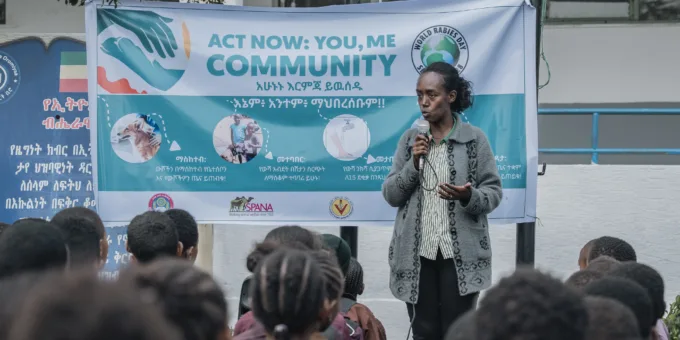
We’re helping communities recognise the dangers and symptoms of rabies through our education programme. We’ve developed posters and hold training sessions to help communities understand the importance of vaccinating dogs, who are the main transmitters of rabies. We also explain what to do if they are bitten or scratched by dogs, and how to recognise the signs of rabies in horses, donkeys and camels. People are very receptive because they know that rabies is a deadly disease.
Change is also happening on the global stage. This year, the World Health Organization included animals for the first time in its Pandemic Agreement, which for the first time includes animals in global strategies to prevent pandemics. This is a historic step forward that embraces the One Health approach and acknowledges the vital role animals play in the health of our shared world.
This policy change follows on from 2022, when One Health was recognised at the highest level, when the United Nations Environment Assembly voted to adopt a resolution, known as the ‘Animal Welfare – Environment – Sustainable Development Nexus’.
There have been important strides forward, but much still remains to be achieved. This World Animal Day, join us in recognising the importance of One Health and taking action to protect animals, people, and our shared environment. Find out more at: www.spana.org/worldanimalday
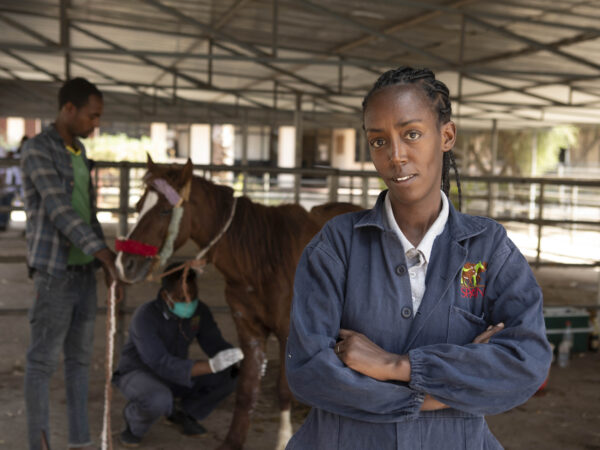
Dr Hanna Zewdu, Doctor of Veterinary Medicine, Master of Science, Addis Ababa University College of Veterinary Medicine and Agriculture, and Ethiopia project lead for SPANA.