
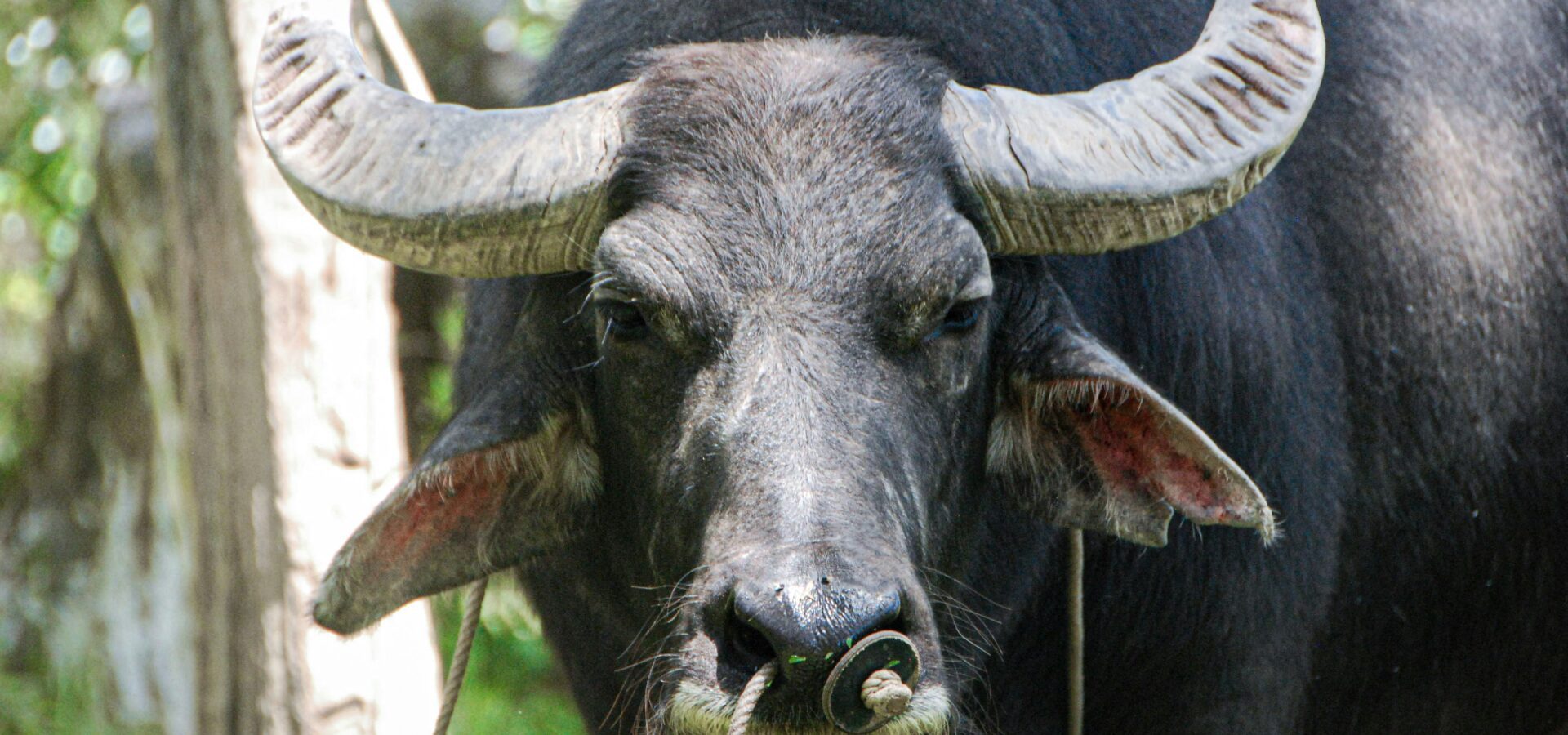
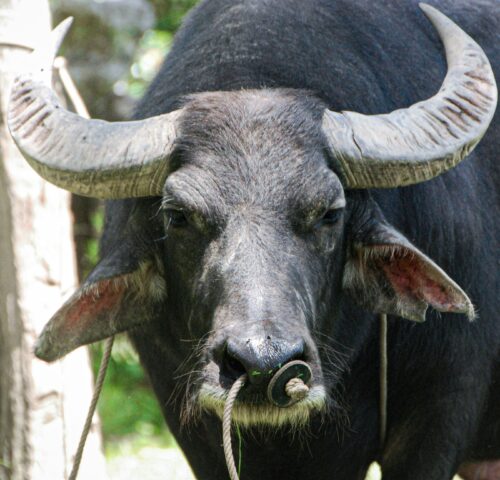
What is a Water Buffalo?
Water buffalo are large bovines known for their distinctive curved horns and love of water. First domesticated more than 5,000 years ago in Southeast Asia, they’ve been used by farmers for tasks like ploughing fields and pulling carts ever since. There are two main types of water buffalo: river buffalo, which are larger and mainly raised for their milk (famous for products like mozzarella cheese), and swamp buffalo, which are smaller, sturdier animals used for heavy labour, especially in rice fields.
Where do Water Buffalo Live?
Water buffalo are native to Asia and are found in countries like India, China, Thailand, and the Philippines. Over time, their agricultural importance has led their population to expand globally. In their natural habitat, water buffalo thrive in lowland areas near rivers, swamps, and other wetland environments. They prefer tropical and subtropical climates, particularly those prone to flooding or heavy rainfall. While domesticated buffalo are kept on farms worldwide, there are still wild water buffalo populations in southeast Asia, though these are increasingly at risk.
What Do Water Buffalo Eat?
Water buffalo are herbivores, feeding mostly on vegetation found in wetland areas. Their diet changes depending on the region; swamp buffalo tend to eat more aquatic plants, while river buffalo mostly graze on grass.
Water buffalo are useful as grazers, helping to control plant growth, particularly in rice paddies. Domesticated buffalo are sometimes given additional food, such as hay, silage, or concentrated feed, especially in dairy farms.
Can Water Buffalo Swim?
Yes, water buffalo are excellent swimmers. Their love for water is one of their most distinctive traits. You’ll often see them wallowing in mud or swimming in rivers and ponds. Wallowing in water helps them stay cool in hot climates, as it regulates their body temperature. The mud also offers protection from the sun and keeps insects away.
Are Water Buffalo Endangered?
The conservation status of water buffalo depends on the species. While domesticated water buffalo are not endangered, wild water buffalo, found in parts of India, Nepal, and Southeast Asia, are considered endangered. Fewer than 5,000 wild buffalo are left due to threats like habitat loss, poaching, and hybridisation with domesticated buffalo. Conservation efforts focus on protecting their habitats, preventing hybridisation, and reducing poaching.
What is the Difference Between an Ox and a Water Buffalo?
Oxen are typically domesticated cattle, usually castrated male cows of various breeds, and are known for their strength and endurance. They are commonly used for ploughing and hauling heavy objects. Water buffalo, on the other hand, are a different species, belonging to the Bubalus genus and are most commonly associated with wetland environments. They have larger, curved horns and a stockier build. While both animals are used as working animals, buffalo are more suited to rice paddies and areas with heavy water, whereas oxen are more versatile across a range of climates and terrains.
Here at SPANA, our veterinary care helps water buffalo all over the world. From treating wounds and illnesses in water buffalo to rescuing them from natural disasters and harsh conditions, our work makes a real difference.
In 2022, for example, we launched an emergency project in Manipur, eastern India, to protect water buffalo from an outbreak of haemorrhagic septicaemia. Working with a local partner, we vaccinated 2,682 buffalo and trained 396 animal owners to help safeguard their animals. With 80 per cent of people in the region relying on agriculture and forestry, these buffalo are essential for ploughing fields and carrying timber. When emergencies strike, working animals need our help more than ever. Explore our success stories to see the animals we’ve helped, or make a donation to support working animals in need around the world.